 Skip to content





If you are comparing the Ribao BC-40, BC-55, and BCS-160, the fastest way to choose is not to start with every specification. Start with your cash-handling workflow.
Choose the Ribao BC-40 if you want an affordable entry-level mixed denomination bill counter for everyday small business cash handling.
Choose the Ribao BC-55 if you want an upgraded one-pocket model with 2 CIS, more currency support, serial number recording, and stronger detection features.
Choose the Ribao BCS-160 if you handle heavier cash volume and need a two-pocket money sorter with a reject pocket to keep sorting and counting more continuous.
All three models can help with mixed denomination value counting. The real difference is what happens when you need more detection, more records, or a smoother sorting workflow.
Author: RIBAO
RIBAO is a professional cash-handling equipment manufacturer with nearly 30 years of experience. Headquartered in Dallas, USA, RIBAO has developed support for over 100 currencies, serves customers across 55 markets worldwide, and maintains a US-based after-sales department. This guide was prepared by RIBAO to help customers compare bill counters and money sorters by real cash-handling needs.
Quick Recommendation
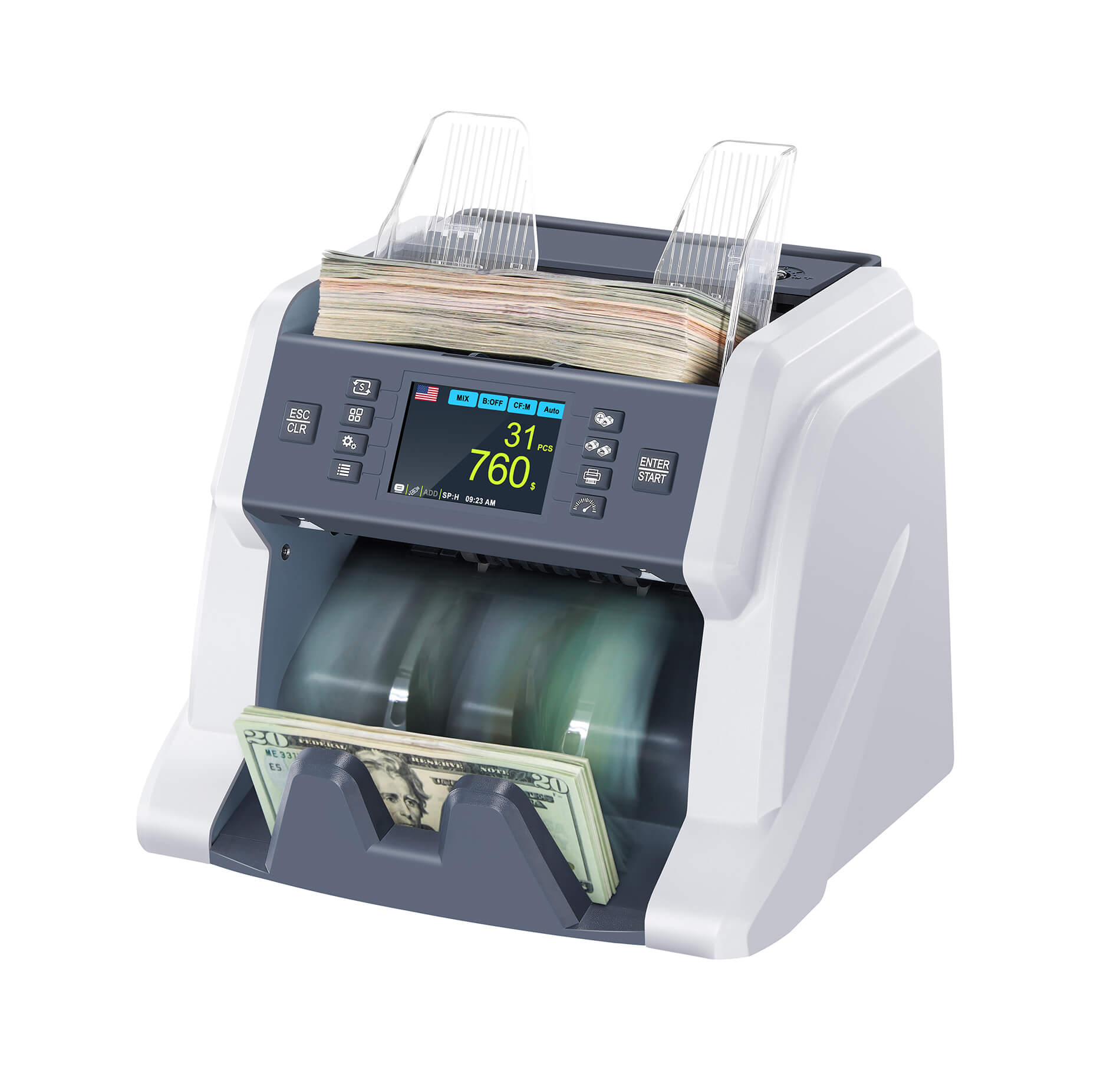
Entry-level one-pocket model
Ribao BC-40
$529.00
Best for small businesses that want an affordable mixed denomination bill counter for everyday cash counting.
View BC-40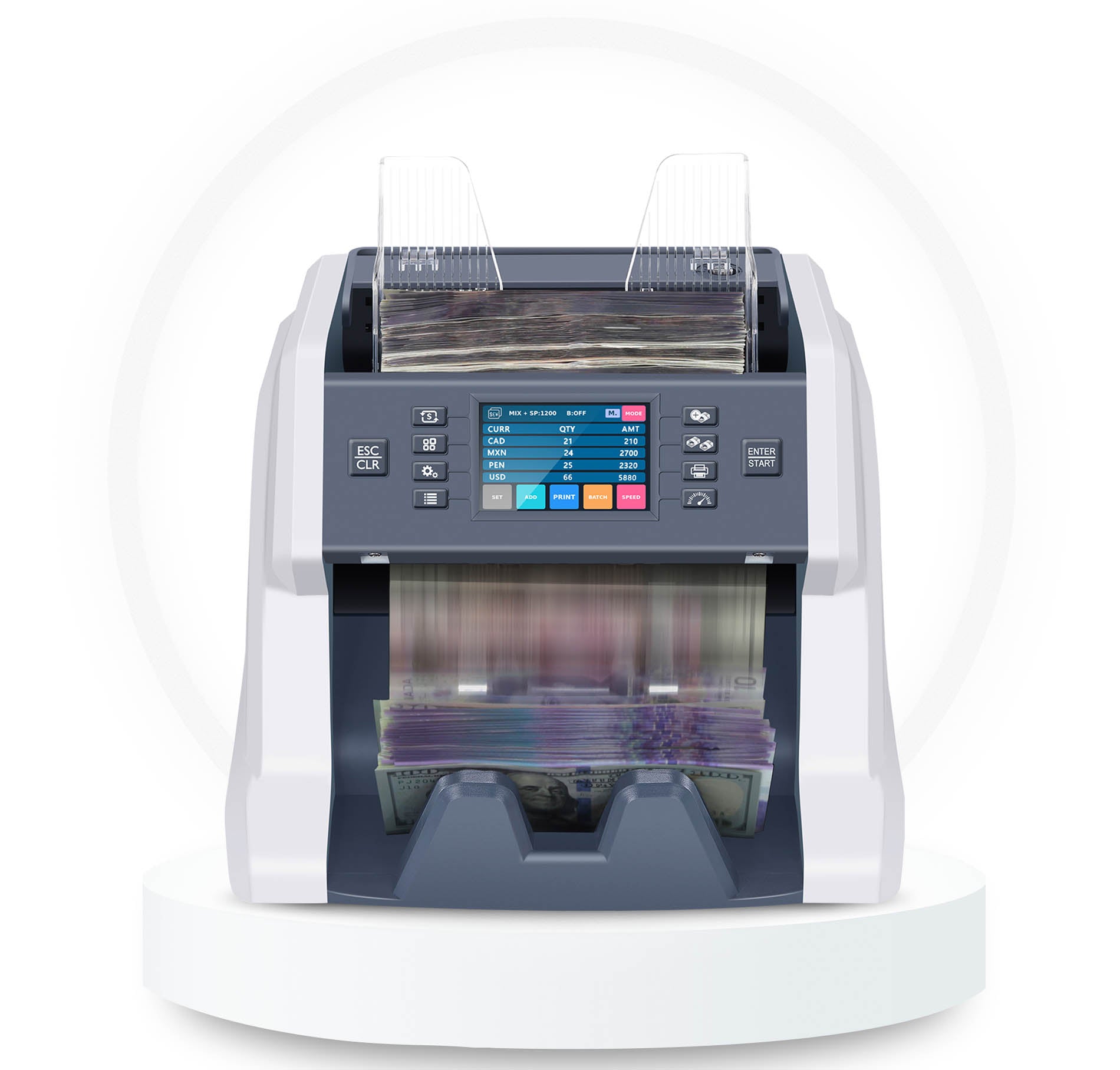
Upgraded one-pocket model
Ribao BC-55
$679.99
Best for users who want 2 CIS, broader currency support, serial number recording, and stronger detection features.
View BC-55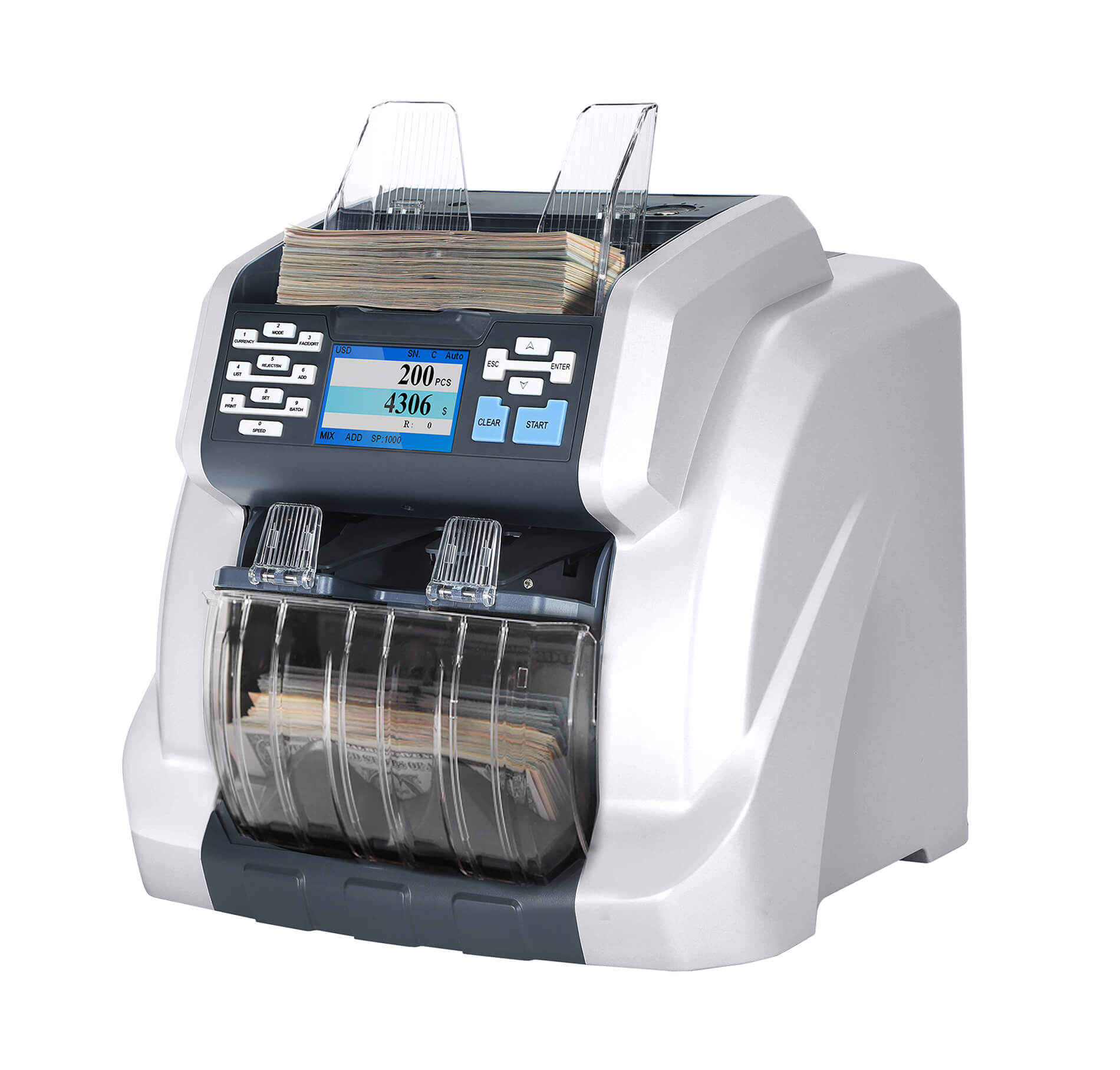
Two-pocket sorter
Ribao BCS-160
$1,299.00
Best for heavier cash handling workflows that need a reject pocket and more continuous sorting.
View BCS-160Before Comparing Models
Many buyers use the words money counter, bill counter, currency counter, and money sorter almost interchangeably. But for choosing the right machine, the difference matters.
A basic bill counter mainly counts pieces. In many cases, it works best when bills are already sorted by denomination. If you put in 100 bills, it tells you there are 100 bills. It may not automatically calculate the total value of a mixed stack.
A mixed denomination value counter goes further. It identifies denominations and calculates the total value of the stack. This is the category that matters for the Ribao BC-40 and BC-55. They are not just basic piece counters. They are one-pocket mixed denomination value counters.
A money sorter adds a workflow advantage. It does not only count and calculate value; it can also help separate bills by sorting conditions. A two-pocket sorter like the BCS-160 has a main stacker and a reject pocket, so rejected or off-sorted bills can be separated without stopping the main workflow as often.
That is why this comparison is not simply about "good, better, best." It is about which workflow you need.
BC-40 vs BC-55 vs BCS-160 Comparison
| Model | Current price | Pocket type | Best for | Key reason to choose it |
|---|---|---|---|---|
| Ribao BC-40 | $529.00 | One-pocket | Small businesses that want an affordable mixed denomination bill counter | 1CIS, Entry-level value counting for everyday mixed bills |
| Ribao BC-55 | $679.99 | One-pocket | Users who want upgraded detection, currency support, and cash records | 2 CIS, up to 32 installed currencies, serial number recording |
| Ribao BCS-160 | $1,299.00 | Two-pocket | Heavier cash handling and sorting workflows | Reject pocket, sorting support, and fewer workflow interruptions |
One-Pocket vs Two-Pocket Money Counters: The Real Workflow Difference
The biggest practical difference between BC-40 / BC-55 and BCS-160 is the pocket design.
BC-40 and BC-55 are one-pocket mixed denomination bill counters. They are strong choices when you need value counting: put in a mixed stack, let the machine identify denominations, and get the total value and denomination breakdown.
For many small businesses, that is enough.
The limitation appears when you are sorting or handling exceptions. In a one-pocket workflow, if the machine detects a bill that does not match the sorting condition, or if it finds a bill that needs attention, the process may stop and wait for the user to remove or check that bill.
BCS-160 is different because it is a two-pocket mixed money sorter. The second pocket is the reject pocket. In practice, this means the machine can send certain rejected, worn, suspicious, counterfeit, or off-sorted bills into the reject pocket while the main stacker continues receiving normal bills.
This does not mean the machine will never need human attention. It means the workflow is designed to reduce interruptions during sorting and reject handling.
If you count a moderate amount of cash and mainly need totals, one-pocket may be enough. If you sort frequently or interruptions cost you time, two-pocket becomes much more valuable.
Choose BC-40 for Affordable Mixed Denomination Counting
BC-40 is the best starting point if you want an economical mixed denomination bill counter.
It can count a stack of mixed bills and calculate the total value, so you do not have to manually separate every bill by denomination before counting. It is especially practical for small businesses that handle daily cash but do not need the extra reporting and sorting workflow of a higher-tier model.
BC-40 supports value counting, denomination breakdown, multiple counting modes, and counterfeit detection features such as UV, MG, IR, RGB, dimension detection, and one-side CIS image detection.
It is a good fit if:
- You run a small business and need reliable daily cash counting.
- You want an affordable way to count mixed bills and see total value.
- You mostly handle USD, EUR, CAD, or MXN.
- You do not need serial number recording.
- You do not need a two-pocket reject workflow.
BC-40 is not the model to choose if you want the strongest detection setup, the widest currency support, or the smoothest sorting workflow. It is the model to choose when value, simplicity, and everyday mixed-bill counting matter most.
Choose BC-55 for Stronger Features in a One-Pocket Model
BC-55 is the natural upgrade from BC-40 if you still want a one-pocket machine but need more capability.
The biggest reasons to choose BC-55 are 2 CIS, broader currency support, serial number recording, and stronger detection features. According to the product page, BC-55 supports up to 32 installed currencies and can read and output serial numbers of each note.
That makes BC-55 a better fit for users who care about cash records, tracking, and management. If you need to keep more detailed counting records, work with more currencies, or want a stronger detection system than BC-40, BC-55 is the better choice.
It is a good fit if:
- You want an upgraded one-pocket mixed denomination value counter.
- You handle more than the basic set of currencies.
- You want serial number recording for cash tracking.
- You want 2 CIS and stronger detection features.
- You want more reporting ability without moving to a two-pocket sorter.
BC-55 is not mainly about faster sorting. It is about upgrading the one-pocket experience with stronger recognition, broader currency support, and better record capability.
BC-40 vs BC-55: What Do You Get by Upgrading?
If you are deciding only between BC-40 and BC-55, ask one question:
Do you just need affordable mixed denomination value counting, or do you also need stronger recognition, more currencies, and serial number records?
Choose BC-40 if your cash workflow is straightforward. It is the economical choice for small businesses that mainly need to count mixed bills, calculate total value, and get a denomination breakdown.
Choose BC-55 if your workflow has more control and record-keeping needs. The upgrade gives you 2 CIS, more currency capacity, serial number recording, and stronger detection capability.
- BC-40 is the better value choice.
- BC-55 is the better feature upgrade.
Choose BCS-160 for Continuous Sorting and Heavier Cash Handling
BCS-160 is the right model when the problem is no longer just "How much cash do I have?" but "How do I keep cash processing moving with fewer interruptions?"
Its two-pocket design is the key. The main pocket receives normal counted bills. The reject pocket can receive bills that need to be separated, such as worn, suspicious, rejected, counterfeit, or off-sorted bills depending on the selected mode and condition.
This is especially useful when sorting mixed bills. With a one-pocket machine, sorting can involve more stops because the machine may pause when it finds a different denomination, orientation, currency, or suspicious bill. With a two-pocket sorter, those bills can be directed to the reject pocket so the workflow stays more continuous.
BCS-160 is a good fit if:
- You process higher cash volume.
- You sort bills frequently.
- You want a reject pocket for suspicious, worn, counterfeit, or off-sorted bills.
- You want a more continuous workflow than a one-pocket counter.
- You handle cash for a business where interruptions slow down closing, reconciliation, or deposit preparation.
BCS-160 is probably more machine than you need if your cash volume is light, your workflow is simple, or you mainly need affordable mixed denomination value counting.
Do You Really Need a Two-Pocket Sorter?
Not everyone needs BCS-160.
If you are a small store owner who mainly wants to count mixed bills at the end of the day, BC-40 may already solve the main problem. If you need stronger detection and records, BC-55 may be the smarter upgrade.
You should consider BCS-160 when one-pocket interruptions become a real workflow issue. For example, if your team often sorts bills, handles questionable notes, prepares deposits, or processes enough cash that stopping repeatedly costs time, the reject pocket becomes more than a feature. It becomes a workflow improvement.
So the question is not "Is BCS-160 better?" The better question is:
Will continuous sorting save enough time and attention in your daily cash workflow?
If yes, BCS-160 is the better fit.
Which Ribao Money Counter Should You Choose?
- Choose BC-40 if you want the most affordable way to count mixed denomination bills and calculate total value for daily small business use.
- Choose BC-55 if you want to stay with a one-pocket counter but upgrade to 2 CIS, more currency support, serial number recording, and stronger detection features.
- Choose BCS-160 if your workflow needs a two-pocket sorter with a reject pocket for more continuous sorting and heavier cash handling.
Still Not Sure? Ask a Product Question
If you are not sure which model fits your workflow, send us a few details before ordering:
- What type of business do you run?
- About how much cash do you count per day?
- Which currencies do you need to count?
- Do you need serial number recording?
- Do you need sorting by denomination, face, orientation, or currency?
- Do you need a reject pocket for worn, suspicious, counterfeit, or off-sorted bills?
With those answers, it is much easier to recommend the right model.
The best Ribao money counter is not the one with the most features. It is the one that matches how you actually handle cash every day.